When Infinity Nikki first appeared in late 2024, it quickly became a global phenomenon. The open-world dress-up adventure pulled in ten million downloads during its launch weekend and doubled that figure within a week, reaching 20 million players. Alongside Love and Deepspace, the title helped Papergames approach nearly $1 billion in revenue in 2024. But a closer look at that success points to a familiar monetization engine—one that is now facing fresh criticism following the game’s Steam launch on April 28, 2025.
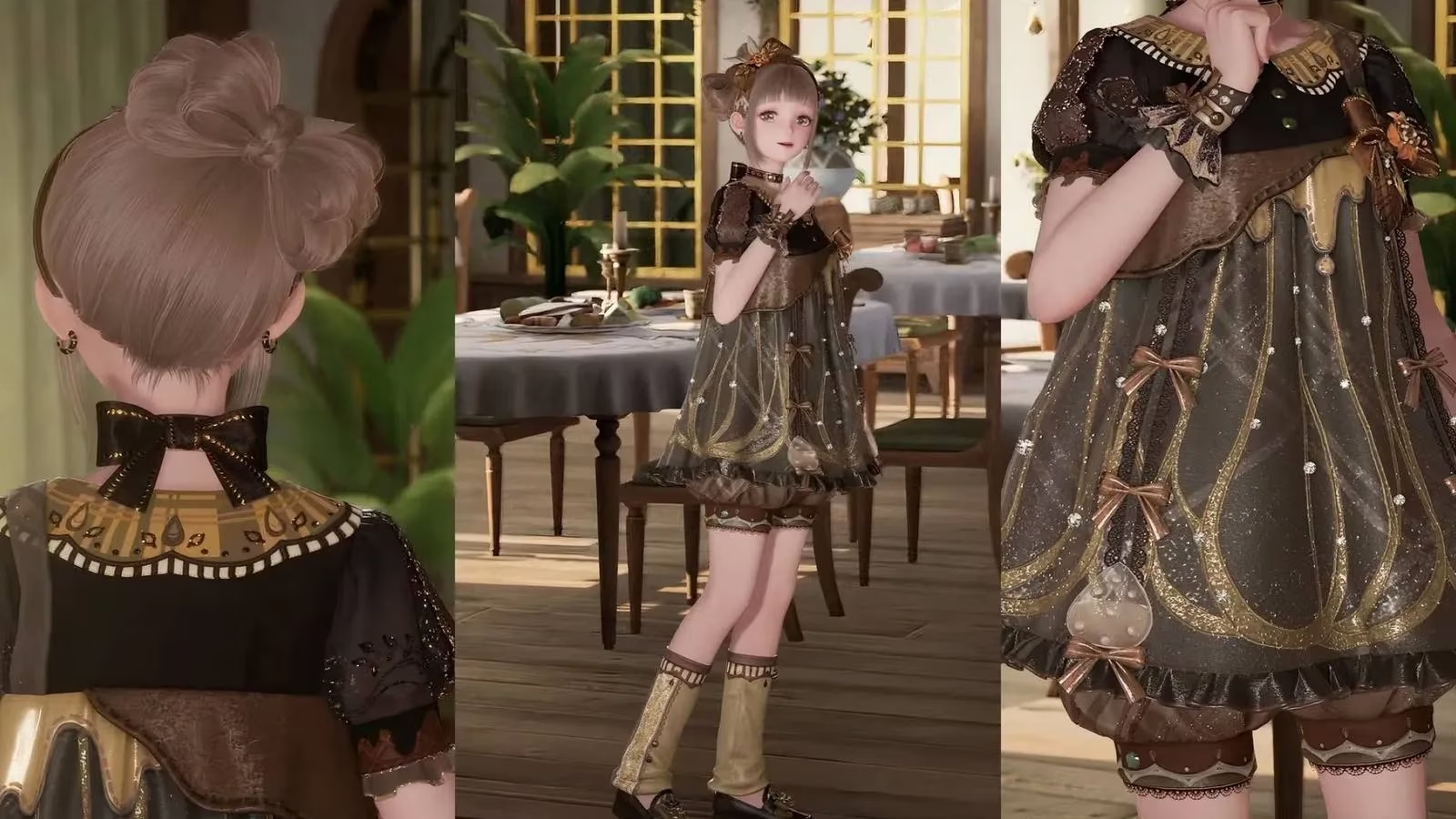
That Steam debut opened the door to a new audience, but it also laid bare the game’s microtransaction structure. As of early 2026, the conversation around Infinity Nikki remains defined by those first Steam reviews, which quickly settled into ‘Mixed’ territory with only 47 percent positive feedback. Many negative reviews do not attack the game’s visuals, world design, or dress-up mechanics. Instead, they focus on the cost of staying fashionable.
The pricing complaints are hard to ignore. One reviewer claimed that a single five-star outfit can cost about $440 worth of in-game credit, while another noted that certain banners run into ‘hundreds of euros.’ For players used to buying a complete game at a fixed price, that math lands like a gut punch. The game does not hide its gacha-style banner system, but the path from ‘just one more pull’ to a triple-digit bill can be dangerously short.
Some of the loudest criticism comes from China, where the game is developed. Reviewers from the region say local players have been review-bombing the Steam page in an effort to get the development team’s attention. The reason? Rising microtransaction prices. According to one review, the campaign had already generated around 230,000 comments, and that number was still climbing. Whether or not the tactic will lead to change is unclear, but the message from a dedicated home audience is blunt: the current model is too expensive.
Beyond the raw price tags, players say the game leans heavily on fear of missing out. Limited-time outfits and rotating banners create a pressure cooker environment. One particularly detailed review described the experience as ‘full to the brim of dark patterns’ designed to keep players logging in daily, gambling, and feeling constant FOMO. The reviewer added, ‘I WISH I could recommend this game, but I wouldn’t want to subject someone to the psychological damage it does, or the money it can drain from you.’
That quote captures a growing tension in live-service gaming. Infinity Nikki is not the first gacha title to rely on daily engagement, but the gap between its cozy, pastel aesthetic and its aggressive monetization feels especially stark. After all, a game about collecting pretty dresses should not leave players feeling financially stripped.
The numbers fuel the frustration. A five-star outfit can cost more than a brand-new console, and a full banner rotation can dwarf a monthly gaming budget. The monetization machine hums along even as reviews pile up.
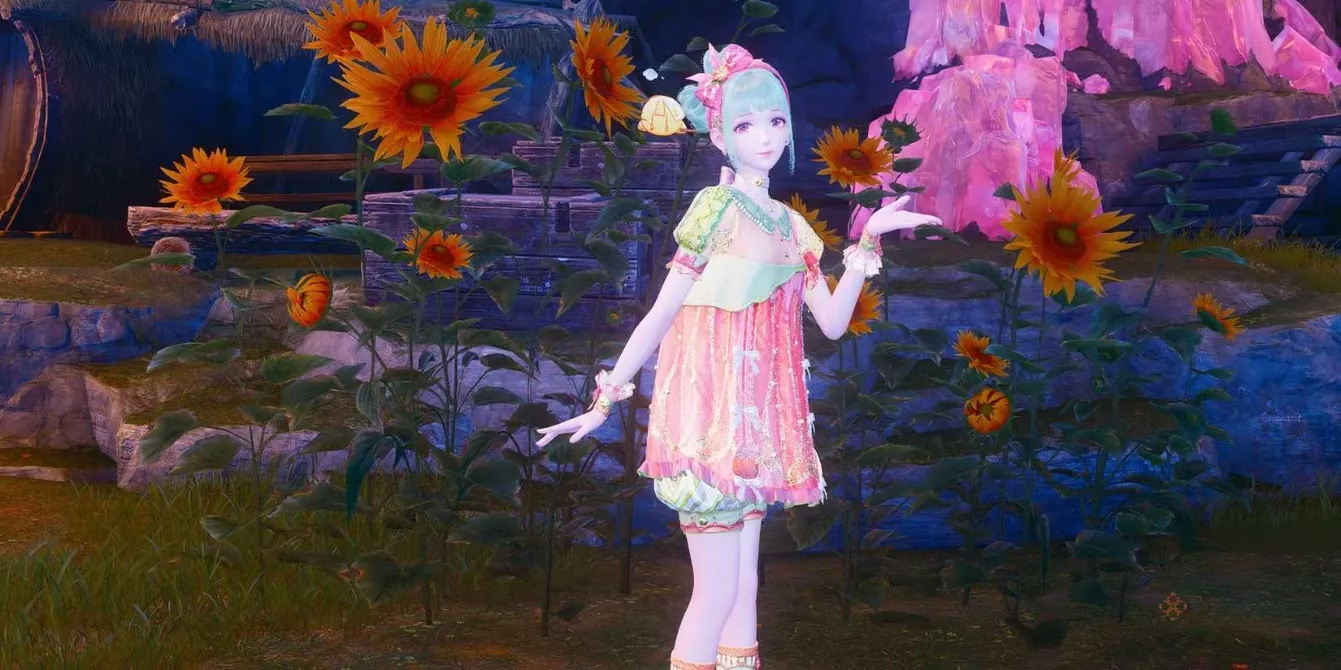
A quick look at the main complaints shows a clear pattern:
| Complaint | Reported figure |
|---|---|
| Five-star outfit cost | About $440 of in-game credit |
| Banner cost | Hundreds of euros |
| FOMO pressure | Limited-time outfits push spending |
| Review-bombing campaign | Around 230,000 comments and rising |
Despite the backlash, the financial reality is stark. Infinity Nikki has already proven that its model can generate enormous revenue. Papergames made nearly $1 billion in 2024 across its titles, and a wave of negative Steam reviews may not be enough to force a rethink. Game publishers often shrug off mixed reviews when revenue stays healthy. In this case, the money continues to flow, and that gives the developer little incentive to restructure its economy.
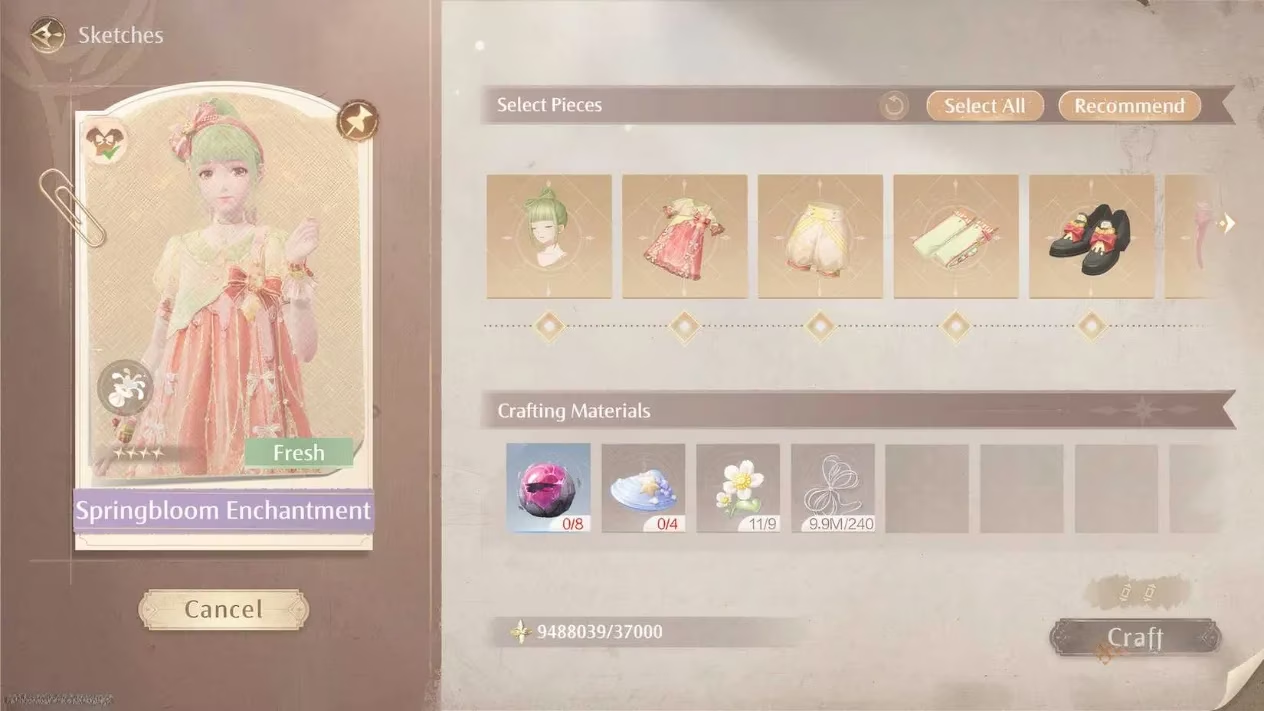
That is the harsh paradox. Players can call for boycotts, post thousands of critical comments, and warn newcomers about dark patterns, but if enough people keep opening their wallets, the system survives. The house, as they say, usually wins.
For now, Infinity Nikki remains a beautifully designed dress-up adventure with a monetization layer that many players find impossible to recommend. The Steam reviews tell that story with unusual clarity: the game itself is lovely; the price of participation is not. Whether the development team responds to the criticism—or simply waits out the storm—will shape how this 2026 chapter unfolds.